


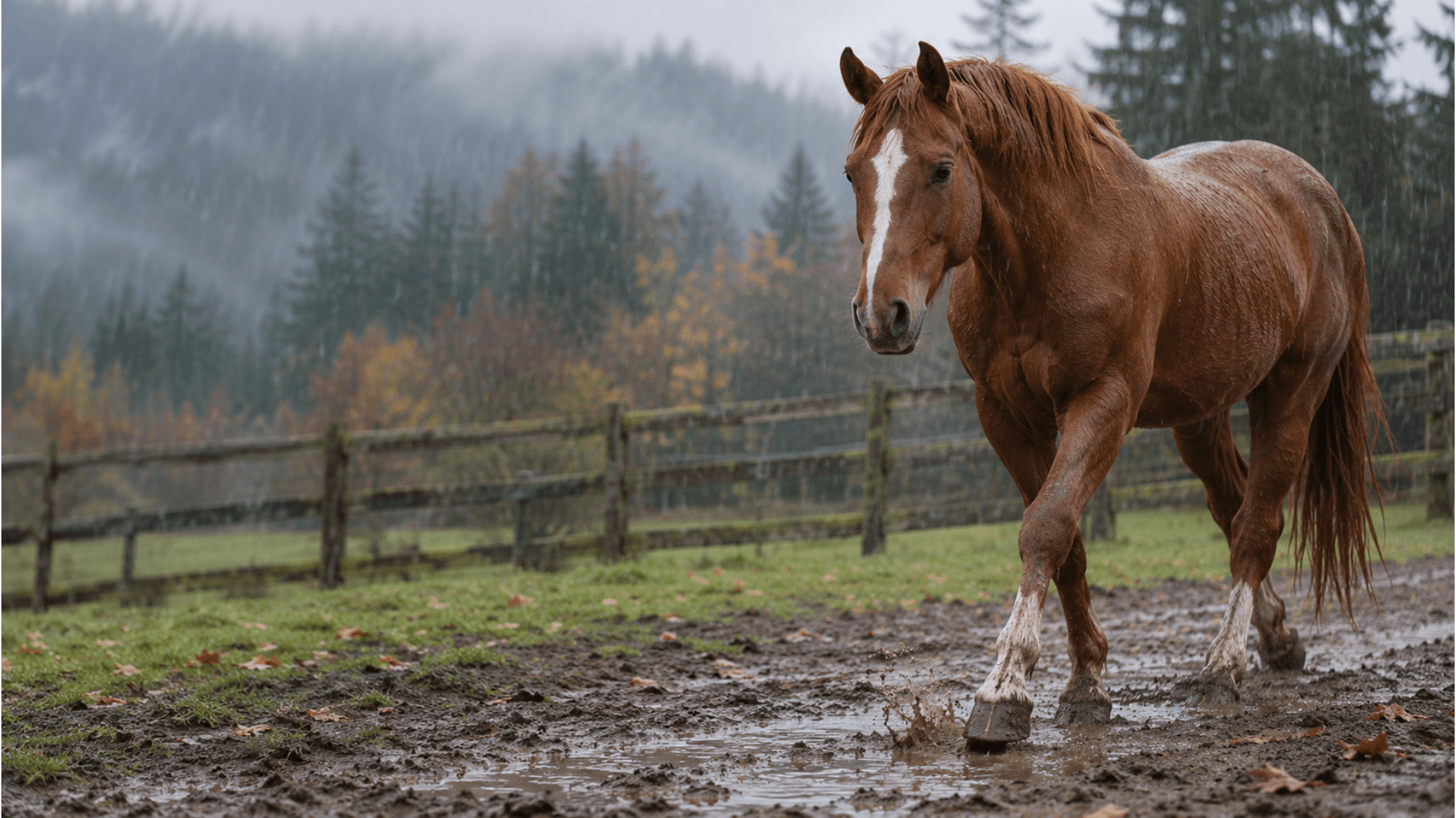

As the seasons change and wetter weather settles in, muddy paddocks become a familiar challenge for many horse owners. While a little mud may seem harmless, prolonged exposure to wet conditions can take a toll on your horse's hooves.
From thrush and hoof cracks to softened soles and abscesses, seasonal moisture can create problems that go beyond muddy legs and dirty stalls. Understanding how wet weather affects hoof health and what you can do to protect your horse can make a difference throughout the fall and winter months.
How Does Wet Weather Affect Your Horse's Hooves?
A horse's hoof is designed to withstand a variety of environmental conditions, but excessive moisture can compromise its integrity.
When hooves remain wet for extended periods, the hoof horn absorbs moisture and becomes softer. This can make the hoof more vulnerable to wear, damage, and certain infections.
Repeated transitions between wet and dry conditions can also contribute to changes in hoof horn quality, making existing cracks and weaknesses more noticeable.
3 Common Hoof Problems During Wet Weather
1. Thrush
Thrush is a bacterial infection that typically affects the frog of the hoof. Wet, muddy environments, especially those contaminated with manure, create conditions that allow thrush-causing bacteria to thrive.
Common warning signs include a strong, unpleasant odor, dark discharge around the frog, and tenderness.
2. Hoof Cracks and Weak Hoof Walls
Prolonged moisture exposure can soften hoof horn, while repeated wet-to-dry cycles can contribute to cracking and splitting. Overgrown or unbalanced hooves may be particularly vulnerable.
3. Hoof Abscesses
Wet conditions can soften the hoof sole and make hooves more susceptible to damage. Abscesses may develop when bacteria enter through defects or injuries in the hoof.
A hoof abscess can cause sudden, significant lameness and should be evaluated by a veterinarian or qualified hoof-care professional.
5 Ways to Support Hoof Health During Muddy Weather
1. Pick Out Hooves Daily
Removing packed mud, manure, and debris allows you to check for changes in the frog, sole, and hoof wall before small problems become more serious.
2. Provide a Clean, Dry Area
Whenever possible, give your horse access to a well-drained area where their hooves can dry out. Pay particular attention to high-traffic locations around gates, water troughs, and feeders.
3. Maintain Regular Farrier Visits
Keeping hooves properly balanced and trimmed helps reduce excessive stress on the hoof wall and provides opportunities to identify developing problems.
4. Watch for Early Warning Signs
Unusual odors, black discharge, cracks, heat, tenderness, or sudden changes in movement may indicate a hoof problem. Consult your veterinarian or farrier if you notice anything concerning.
5. Support Hoof Health Through Proper Nutrition
Healthy hooves start with a balanced diet. Nutrients such as biotin, zinc, copper, quality protein, and the amino acid methionine contribute to normal hoof formation and integrity.
When a horse's diet doesn't supply adequate amounts of these nutrients, targeted supplementation may help support hoof quality over time.
Healthy Hooves Start from Within
While no supplement can eliminate mud-related hoof problems, proper nutrition is one important part of a comprehensive hoof-care routine.
Horse Guard offers several hoof-support formulas to help meet different nutritional needs:
- Biotin Hoof Blast: Provides 100 mg of biotin per daily serving, along with zinc, methionine, and MSM to support healthy hoof growth.
- Hoof & Hair Guard: A nutritional supplement formulated to support healthy hooves, hair, and coat.
- Equine Hoof Guard: A hoof-focused nutritional option for supporting normal hoof growth and quality.
Because hoof growth is gradual, nutritional improvements take time to become visible. Consistency is important, and significant changes in hoof quality may take several months.
The Bottom Line
Wet weather and muddy paddocks may be unavoidable, but many hoof problems can be managed with consistent care.
Daily hoof cleaning, dry footing, regular farrier visits, and balanced nutrition all play important roles in keeping hooves healthy through the changing seasons.
Remember: Healthy hooves are built from the inside out, but protecting them from the elements matters just as much!


Leave a comment (all fields required)