

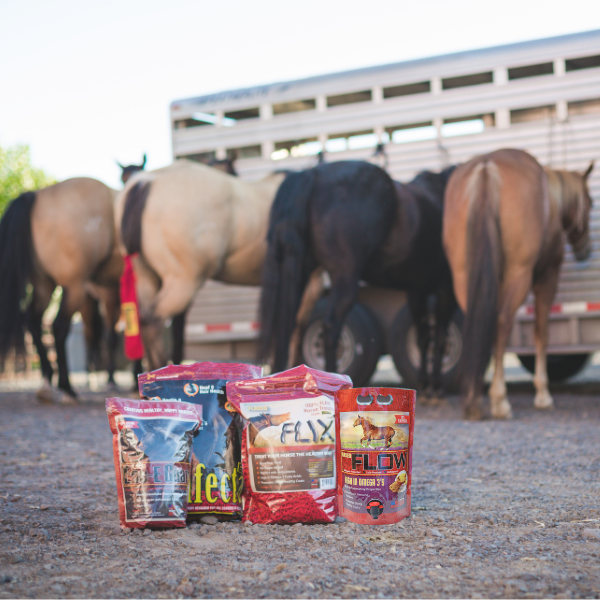


When it comes to equine nutrition, more isn't always better.
As horse owners, we all want what's best for our horses. Whether we're supporting hoof growth, improving coat condition, maintaining joint health, or helping a horse gain weight, supplements can play an important role in their overall nutrition.
But with so many products available, it's easy to find yourself adding one supplement after another without realizing that several may contain the same ingredients.
While each supplement may offer its own benefits, combining multiple products without reviewing their nutritional profiles can lead to unnecessary ingredient overlap, wasted money, and, in some cases, excessive nutrient intake.
The goal of supplementation shouldn't be to feed more. It should be to provide what your horse actually needs.
What Is Over-Supplementation?
Over-supplementation occurs when a horse receives more of a particular nutrient or ingredient than is necessary, potentially exceeding recommended or safe intake levels.
This can happen when multiple supplements contain the same vitamins, minerals, or other nutritional ingredients.
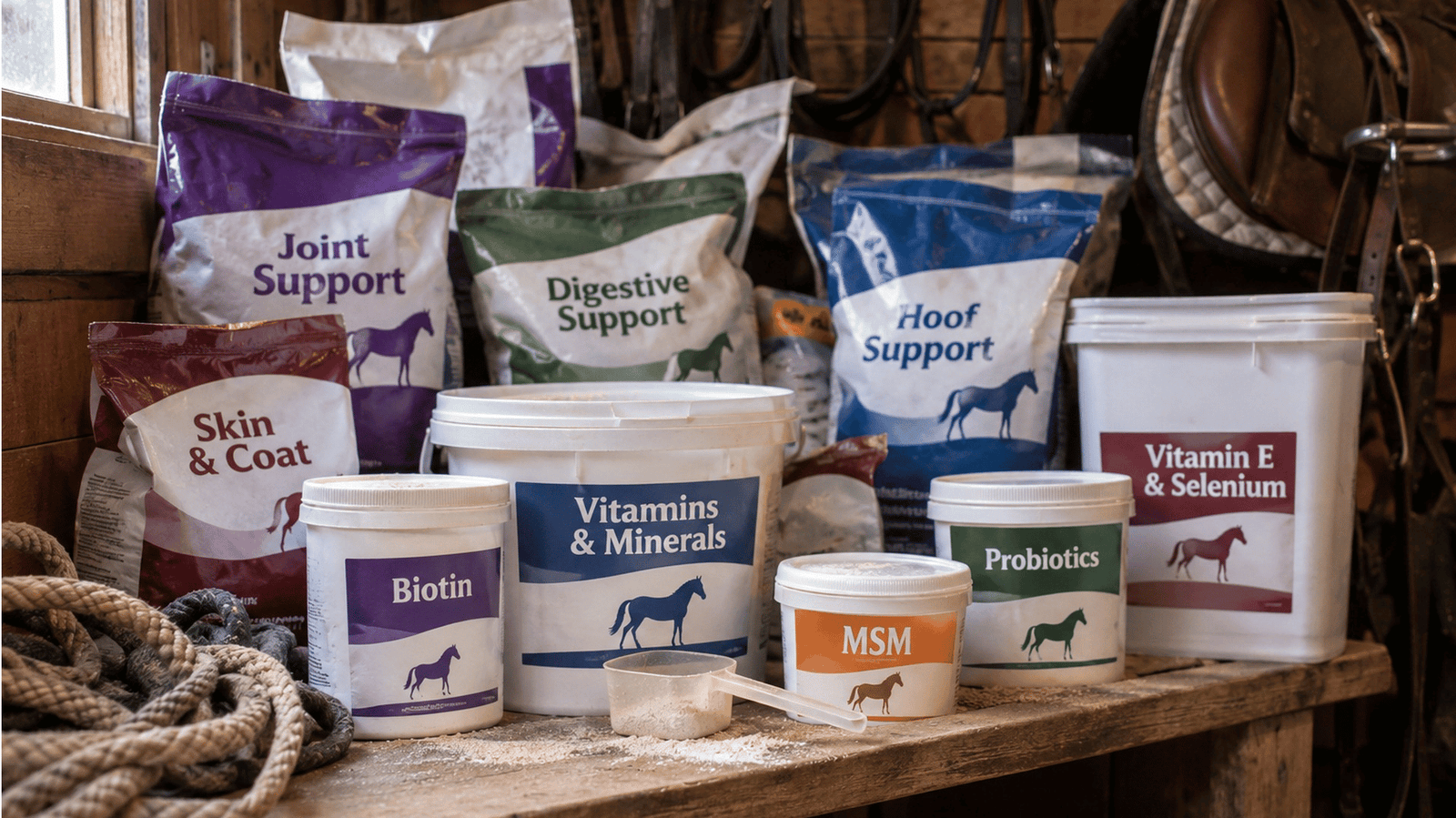
For example, a horse owner might feed:
- A daily vitamin and mineral supplement
- A hoof supplement containing additional biotin, zinc, and methionine
- A joint supplement containing MSM
- A digestive supplement containing probiotics and yeast
- A fortified commercial feed that already supplies many of these nutrients
Individually, these products may serve a purpose. However, when combined, certain ingredients can overlap.
It's important to understand that ingredient overlap does not automatically mean a horse is being over-supplemented. The concern is the total amount being consumed relative to the horse's nutritional requirements.
This is especially important with certain vitamins and trace minerals, where excessive intake or nutrient imbalances can become problematic.
Common Ingredients That May Overlap
Some ingredients appear in a wide variety of equine supplements. Knowing which ones to look for can help you make more informed feeding decisions.
1. Selenium
Selenium is an essential trace mineral that supports antioxidant function, muscle health, and normal immune function.
However, selenium has a relatively narrow margin between adequate and excessive intake.
Many commercial feeds and vitamin and mineral supplements already contain selenium. Adding another selenium-containing product without accounting for the total diet can increase the risk of excessive intake.
What to watch for: Multiple fortified feeds, ration balancers, vitamin and mineral supplements, or vitamin E and selenium products being fed together.
2. Vitamin A and Vitamin D
Both vitamins play important roles in maintaining normal bodily functions.
Vitamin A supports vision, immune function, and healthy tissues, while vitamin D helps regulate calcium and phosphorus metabolism.
Because both are fat-soluble vitamins, excessive amounts can accumulate in the body and potentially cause toxicity.
What to watch for: Feeding multiple complete vitamin and mineral supplements alongside fortified feeds, particularly when additional vitamin A or D products are included.
3. Zinc and Copper
Zinc and copper are essential trace minerals involved in hoof health, skin integrity, coat quality, and numerous metabolic functions.
These minerals also interact with one another. Excessive zinc intake, for example, can interfere with copper absorption and contribute to nutritional imbalances.
Hoof supplements commonly contain zinc, while complete vitamin and mineral products may provide both zinc and copper.
What to watch for: Combining multiple hoof supplements or feeding high levels of individual trace minerals without considering the overall mineral balance.
4. Biotin and Methionine
Biotin and methionine are commonly included in hoof supplements because of their roles in supporting healthy hoof growth and keratin production.
Unlike selenium, biotin has a wide margin of safety, and excessive intake from typical supplementation is not generally associated with toxicity.
However, feeding multiple biotin-containing supplements may be unnecessary, particularly when one product already provides a substantial daily amount.
What to watch for: Combining hoof supplements that contain similar amounts of biotin, methionine, and supporting minerals.
5. MSM and Joint Support Ingredients
MSM (methylsulfonylmethane) is commonly found in joint supplements and some hoof formulas. Glucosamine and hyaluronic acid are also frequently used in equine joint support products.
Although these ingredients do not carry the same established toxicity concerns as certain vitamins and minerals, feeding multiple products with overlapping ingredients may provide little additional benefit.
For example, a horse receiving a comprehensive joint supplement may not need another product supplying many of the same ingredients.
What to watch for: Combining joint supplements with multi-benefit formulas that already contain MSM, glucosamine, or hyaluronic acid.
6. Probiotics and Yeast
Digestive supplements often contain probiotics, prebiotics, and live yeast to support normal digestive function.
These ingredients are generally well tolerated, and overlapping products do not necessarily create a safety concern.
However, feeding several digestive supplements containing similar microbial ingredients may be redundant.
What to watch for: Feeding a standalone digestive supplement alongside a comprehensive supplement that already includes probiotics or yeast.
Don't Forget About What's Already in Your Horse's Feed
One of the most common mistakes horse owners make is evaluating supplements without considering the nutritional contribution of their horse's existing diet.
Commercial feeds and ration balancers are often fortified with vitamins and minerals. Depending on the product and the amount being fed, they may already provide a substantial portion of a horse's daily nutritional requirements.
Before adding another supplement, consider:
- Is your horse receiving the manufacturer's recommended daily feeding amount?
- Does the feed already contain selenium, zinc, copper, and essential vitamins?
- Are you feeding a ration balancer or another concentrated source of vitamins and minerals?
- Does your horse have a specific nutritional need that isn't being met through the current diet?
Forage matters, too. Hay and pasture contribute nutrients to the total diet, and their mineral content can vary significantly depending on growing conditions and geographic location.
A horse's complete diet should always be considered before determining which supplements are necessary.
How to Recognize Overlapping Ingredients
The easiest way to identify potential overlap is to compare the labels of every supplement and fortified feed your horse receives.
Step 1: Make a list of everything your horse eats.
Include hay, pasture, grain, ration balancers, supplements, and any additional fortified products.
Step 2: Review the guaranteed analysis and ingredient labels.
Look for repeated nutrients such as selenium, zinc, copper, vitamin A, vitamin D, biotin, MSM, and other commonly supplemented ingredients.
Step 3: Compare actual daily amounts.
A nutrient listed on two different products doesn't necessarily mean your horse is receiving too much. The important factor is how much of that nutrient is supplied by the actual daily serving of each product.
Be sure to check whether nutrient concentrations are listed per pound, kilogram, ounce, scoop, or serving. Convert them to the same units before comparing.
Step 4: Identify your horse's specific needs.
Consider age, workload, body condition, forage quality, overall health, and existing nutritional support.
Step 5: Simplify where possible.
If multiple products are providing the same nutritional benefits, consider whether one comprehensive supplement could meet those needs more efficiently.
For horses with complex diets, health conditions, or multiple fortified products, an equine nutritionist or veterinarian can help evaluate the total nutrient intake.
Could One Supplement Replace Several?
In some cases, yes!
At Horse Guard, we understand that many horse owners are trying to address several nutritional needs at once. That's one reason comprehensive supplements can be such a practical option.
Rather than feeding separate products for daily vitamins and minerals, hoof health, digestive support, and joint support, a multi-benefit formula may help simplify the feeding program.
A Closer Look at Horse Guard Trifecta
Our Trifecta 4-in-1 supplement was designed to combine four important areas of nutritional support into one convenient daily formula:
- Daily Vitamins & Minerals: Essential nutrients to support overall health and wellness.
- Hoof Support: Biotin, zinc, methionine, and MSM to support healthy hoof growth.
- Digestive Support: Prebiotics, probiotics, and live yeast to help maintain digestive health.
- Joint Support: Glucosamine, MSM, and hyaluronic acid to support healthy joint function.
For a horse owner currently feeding several separate products to address these needs, Trifecta may provide a simpler alternative.
However, it's important to recognize that even a comprehensive supplement like Trifecta should be evaluated alongside the rest of the horse's diet. Adding it to an already fully fortified feeding program without reviewing nutrient totals could still result in unnecessary overlap.
The objective is to simplify supplementation while maintaining a balanced nutritional program, not simply to add another product.
When Is Additional Supplementation Necessary?
Not every instance of ingredient overlap is a reason to eliminate a supplement.
Some horses have increased nutritional requirements or specific needs that justify targeted supplementation.
For example:
- A horse with poor hoof quality may benefit from additional hoof-support nutrients.
- A horse with increased antioxidant requirements may need supplemental vitamin E.
- A horse with particular digestive challenges may benefit from targeted digestive support.
- A performance or senior horse may have nutritional requirements that differ from those of an average maintenance horse.
The key is understanding why you're feeding each product and whether the additional nutrients are necessary.
It's also important to remember that every horse is different. Age, genetics, workload, metabolism, existing diet, and health conditions can all influence how a horse responds to supplementation.
What works well for one horse may not be the ideal feeding program for another.
The Bottom Line: Supplement Smarter, Not More
Providing your horse with proper nutrition doesn't mean filling the feed bucket with as many supplements as possible.
It means understanding what your horse is already receiving, identifying potential nutritional gaps, and selecting products that address those needs without unnecessary duplication.
Taking a few minutes to compare ingredient labels and daily feeding amounts can help you avoid overlapping nutrients, simplify your feeding routine, and potentially save money.
At Horse Guard, we believe in making equine nutrition easier to understand. Whether you're feeding a single daily supplement or developing a more targeted nutritional program, our goal is to help you make informed decisions that support your horse's long-term health.
Not sure whether your horse's supplements are overlapping?
Take a closer look at your current feeding program and the ingredients in each product. If you're unsure which Horse Guard supplements make the most sense together, reach out to our team. We're happy to help you review your options and determine which products may best complement your horse's existing diet.
Happy, Healthy Horses. That's what we're here for.





Leave a comment (all fields required)